If you’re repairing or resurfacing an existing slab, one of the most important questions is how to get new concrete to properly bond to old concrete. Without the right preparation for concrete repair, the new layer can separate, crack, or fail much sooner than expected.
Whether you’re fixing a patio, walkway, or driveway, proper bonding comes down to surface prep, timing, and the right materials — not just pouring new concrete on top.
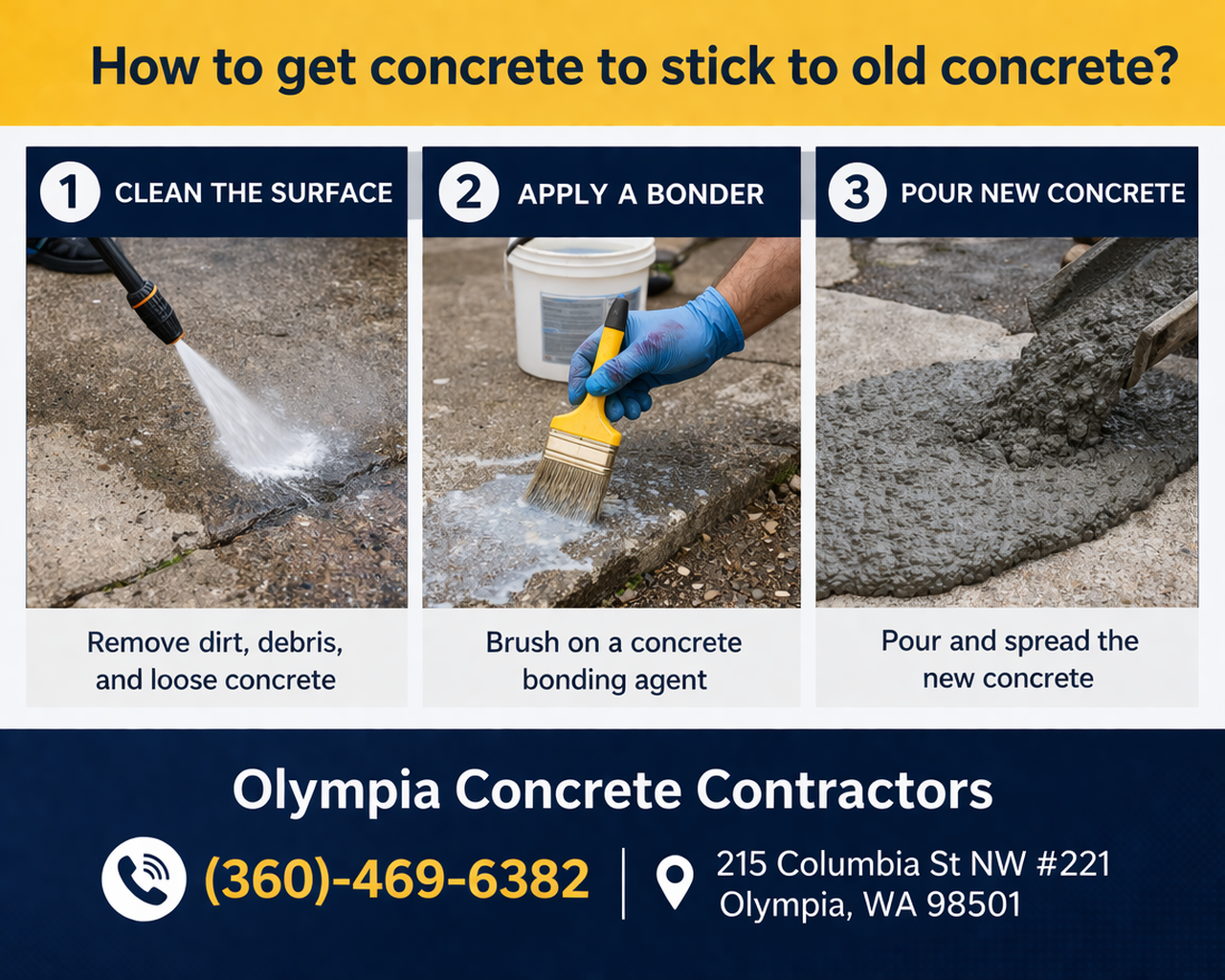
Proper surface preparation is the key to long-lasting concrete repairs.
Step 1: Clean and Roughen the Existing Surface
The first step is making sure the old concrete is clean and textured. Any dirt, moss, paint, or sealers will prevent proper bonding.
Use a pressure washer, grinder, or stiff brush to remove contaminants and expose a solid surface. The goal is to create a slightly rough texture so the new concrete has something to grip.
In damp climates, allowing the surface to dry fully before moving forward is especially important.
Step 2: Apply a Bonding Layer
Once the surface is prepped, a bonding agent or cement slurry is used to help the new concrete adhere.
You can apply a commercial bonding agent or create a simple portland cement slurry mixed to a thin consistency. This layer acts as the adhesive between old and new concrete.
Many concrete contractors use this step to significantly increase the strength of the bond.
Step 3: Pour While the Surface Is Tacky
Timing matters. The new concrete should be placed while the bonding layer is still tacky — not fully dry.
This allows the materials to lock together during curing instead of forming separate layers. If the bonding layer dries completely, adhesion strength decreases significantly.
Why Bonding Matters in Moisture-Prone Areas
Concrete repairs need to withstand moisture, temperature changes, and long-term wear. If bonding fails, water can seep between layers and cause separation.
Working with an experienced concrete contractor helps ensure that both surface preparation and curing conditions are handled correctly.
Common Mistakes to Avoid
- Skipping surface preparation
- Applying bonding agent incorrectly
- Letting bonding layer dry too long
- Pouring in poor weather conditions
- Not allowing proper curing time
These mistakes often lead to premature cracking or delamination.
Mini Case Example: Concrete Repair Done Right
A homeowner needed to repair a cracked patio surface that had started separating from the original slab. The previous attempt had failed due to poor surface prep.
After properly cleaning, applying a bonding layer, and pouring at the correct time, the new repair bonded successfully and has remained stable through seasonal conditions.
When to Call a Professional
Small repairs can be done as DIY projects, but larger areas or structural surfaces require proper planning. Experienced Olympia Concrete Contractors understand how to match mix design, bonding techniques, and curing conditions for long-term performance.
Frequently Asked Questions About Concrete Bonding
Can you pour new concrete over old concrete?
Yes, but only if the surface is properly prepared and a bonding layer is used to ensure adhesion.
Do I need a bonding agent?
While not always required, bonding agents significantly improve the connection between old and new concrete.
Will new concrete stick without roughening the surface?
No. A smooth surface reduces adhesion and increases the risk of separation.
How long should concrete cure after bonding?
Concrete begins setting within 24–48 hours but continues curing for about 28 days for full strength.
Planning a Concrete Repair Project?
Getting new concrete to bond correctly is all about preparation and timing. Skipping steps or rushing the process often leads to costly repairs later.
If you’d rather have it done right the first time, connect with concrete contractors near me or reach out through our contact page to discuss your project.