If you’re planning a project like a patio, slab, or concrete foundation, one of the first questions that comes up is cost. Should you mix concrete yourself, or is it better to have it delivered ready-mix?
The answer depends on the size of your project, the tools you have available, and how important consistency and timing are. While mixing your own concrete may seem cheaper at first, there are several factors that can shift the real cost quickly.
Before deciding, it helps to understand where the money actually goes when working with concrete contractors.
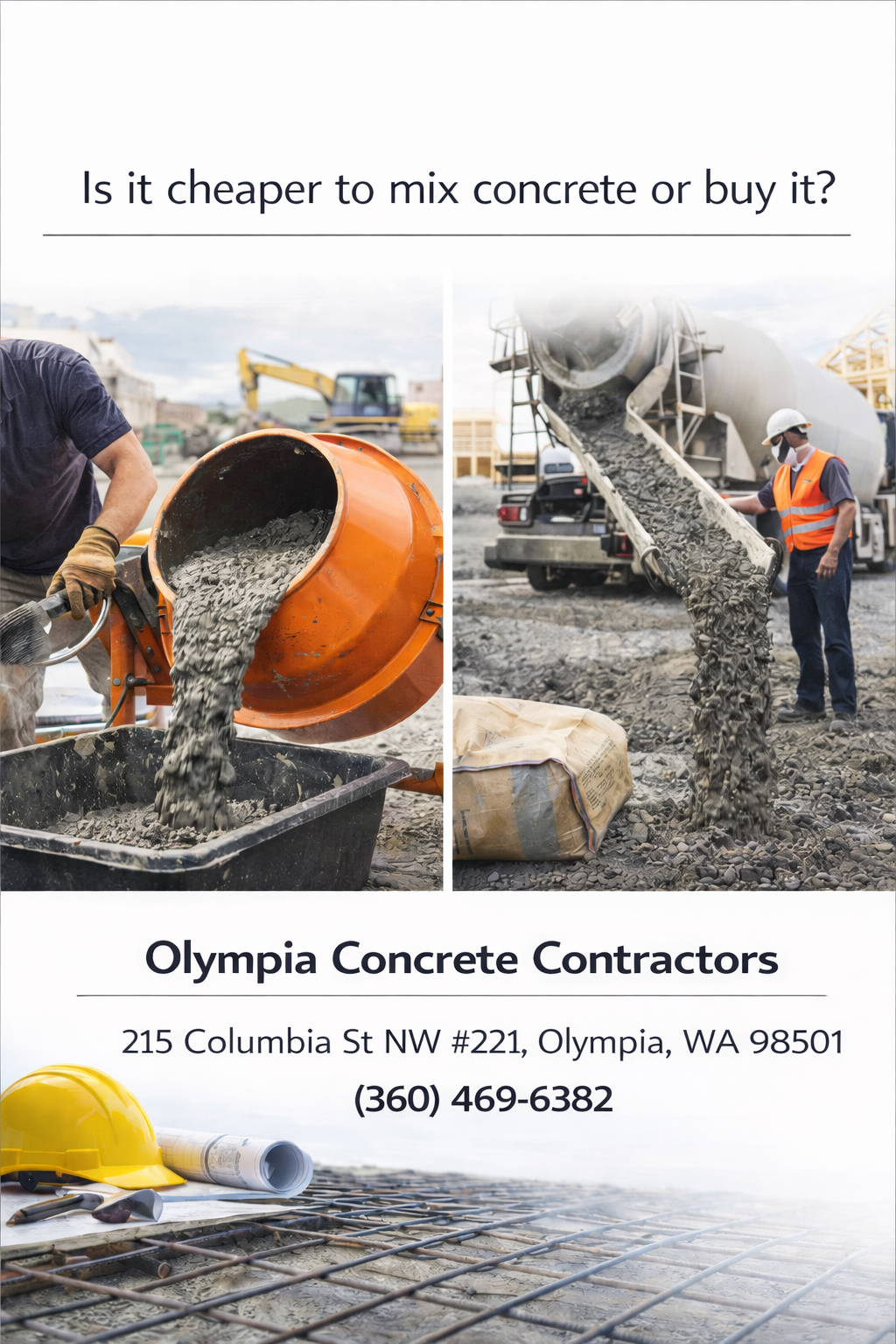
Mixing by hand vs ready-mix delivery depends heavily on project size.
Cost Breakdown: Mixing Concrete Yourself
Mixing concrete yourself typically involves buying bags of cement, sand, and aggregate — or purchasing pre-mixed bags from a store. At first glance, this can appear cheaper, especially for very small projects.
However, the cost adds up quickly when you factor in time, labor, and the number of bags required. A single cubic yard of concrete can require dozens of bags, which means repeated mixing and transporting.
Cost Breakdown: Buying Ready-Mix Concrete
Ready-mix concrete is delivered by truck and poured directly on-site. While the upfront cost may seem higher, it often becomes more cost-effective for medium to large projects.
With ready-mix, you’re paying for consistency, speed, and proper mix ratios — which directly impact durability.
Many homeowners working with Olympia Concrete Contractors find that ready-mix reduces both labor time and risk of errors.
When Mixing Your Own Concrete Makes Sense
- Small repairs or patchwork
- Limited access areas where trucks can’t reach
- Very small slabs or footings
For these types of jobs, mixing by hand can be a reasonable option.
When Ready-Mix Is the Better Choice
- Driveways or patios
- Large slab pours
- Structural work like a concrete foundation
- Projects requiring consistent strength
For anything beyond small-scale work, ready-mix provides better long-term results.
Why Consistency Matters
Concrete strength depends heavily on the water-to-cement ratio and proper mixing. Small variations can lead to weak spots, cracking, or uneven curing.
Ready-mix eliminates these variables by delivering a controlled, engineered mixture designed for the specific application.
Mini Case Example: Slab Installation
A homeowner initially planned to mix concrete for a backyard slab but quickly realized the volume required would take hours to complete.
Switching to ready-mix allowed the entire slab to be poured and finished in a single session, resulting in a stronger and more uniform surface.
Labor and Time Considerations
Mixing concrete manually is physically demanding and time-sensitive. Once you begin pouring, delays can lead to cold joints or uneven surfaces.
Ready-mix eliminates this issue by delivering the full volume at once, allowing for consistent placement and finishing.
Frequently Asked Questions About Mixing vs Buying Concrete
Is it cheaper to mix your own concrete?
For small projects, yes. For larger projects, ready-mix is usually more cost-effective.
How much concrete can I mix by hand?
Most DIY setups are limited to small batches. Larger volumes become difficult to manage efficiently.
Does ready-mix concrete last longer?
Yes, because it’s mixed consistently and designed for strength and durability.
Can I mix concrete in hot or wet conditions?
Environmental conditions affect curing, so proper timing and preparation are critical.
So, Which Option Is Better?
If your project is small, mixing your own concrete may save some money. But for most patio, slab, or foundation projects, ready-mix offers better performance and efficiency.
Understanding the scale of your project is the key to making the right decision.
Planning a Concrete Project?
If you’re unsure which approach is best, working with experienced concrete contractors helps ensure your project is done efficiently and built to last.
When you’re ready, reach out through our contact page to discuss your project and get expert guidance.