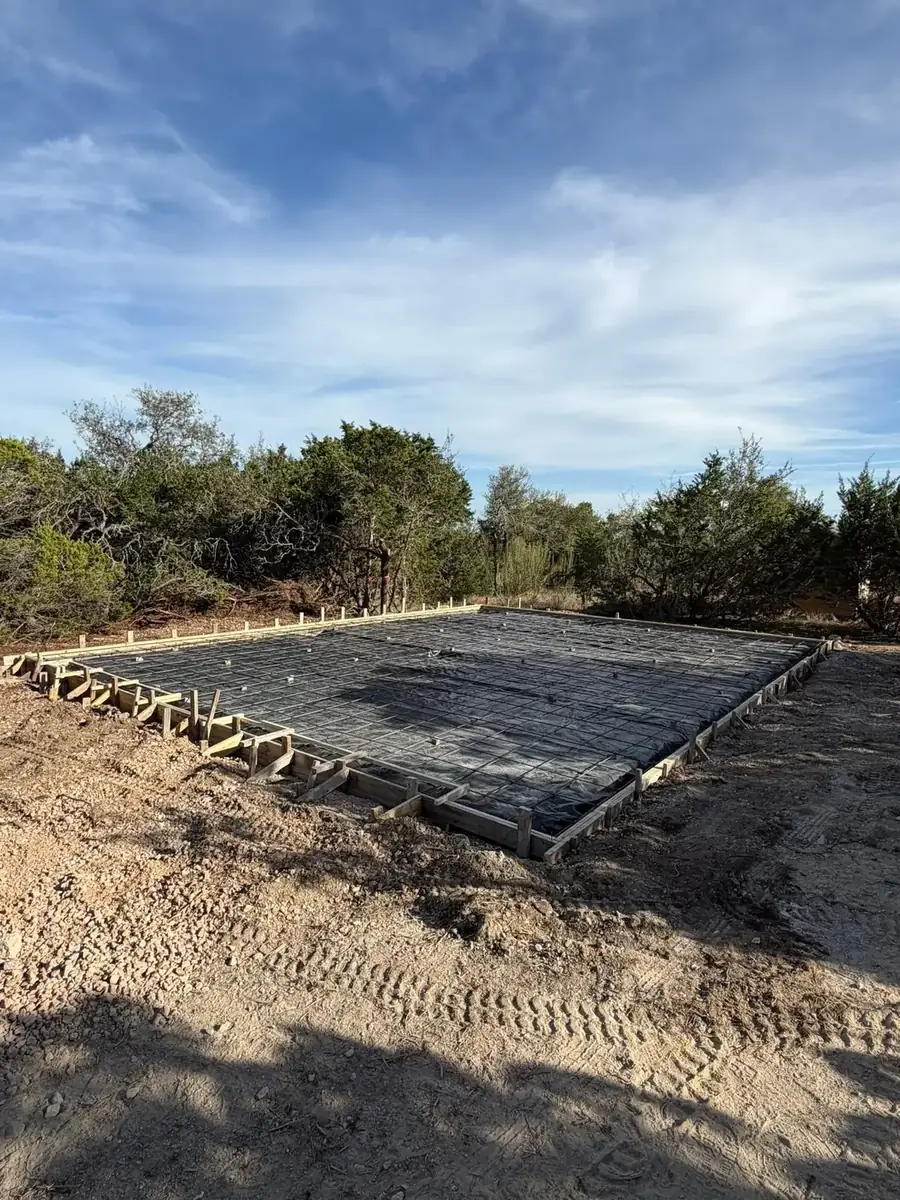
Most spa makers set 4 inches of reinforced concrete as the minimum for a hot tub pad, and ask for more under big tubs and swim spas. In Olympia, thickness is only half the answer. What sits under the slab, and where the water goes when it rains from October to April, decides whether a tub stays level for years or starts to lean by its second winter.
The short answer
- At least 4 inches of concrete, reinforced with rebar or wire mesh, is the common minimum in spa makers’ install guides. Larger tubs and swim spas often call for 6 inches or more.
- Your tub’s own install manual is the final word. Read it before anyone pours.
- Flat matters as much as thick: the pad should be close to level, with no dips that would need shims.
- On soft or wet ground, the gravel base under the slab matters as much as the concrete.
- Plan the power before the pour, so conduit can go in while the forms are open.
Why a hot tub needs a real pad
Water weighs about 8.3 pounds a gallon. A tub that holds 400 gallons carries more than 3,000 pounds of water before you add the shell, the cover or the people climbing in. All of that load sits on the tub’s footprint, day and night, all year.
Put that weight on a soft spot and the tub settles unevenly. A shell that sits out of level puts stress on its frame and leaves the waterline lopsided. Gravel beds and paver bases can work in the right conditions, but on soft or filled ground they can shift, and every shift shows up at the waterline.
How thick is thick enough?
Spa makers’ install guides put the floor at 4 inches of reinforced concrete. Bullfrog Spas, for example, recommends at least 4 inches with rebar or mesh, and 6 inches or more for larger tubs and swim spas. Your manufacturer may ask for something different, so the manual for your model wins.
Our own rule is the one on our pads and slabs page: around 4 inches is fine for a shed or foot traffic, and anything heavier, hot tubs included, gets a thicker, reinforced slab. We size the thickness and reinforcement for the filled weight of your tub and thicken the concrete under it.
Flat, not “close enough”
A hot tub wants a flat base. Bullfrog’s guide allows a fall of only about half an inch over 8 feet and says not to level a tub with shims. That small fall sheds rain off the pad without twisting the shell.
The concrete around the tub is a different story. A deck or patio beside the tub should pitch away from the house and toward a drain or the lawn, so rain and splash-out don’t collect by your back door. Two slopes in one job: nearly flat under the tub, a steady fall everywhere else.
The Olympia part: rain, soft ground and prairie gravel
It rains here from October to April, and water heads for the lowest spot it can find. A pad poured on soft or poorly compacted fill, or in the corner where the yard drains, can settle after a few wet winters. That’s why the base matters: we pour on a compacted crushed-rock base, and wet sites get more of it.
On parts of the Tumwater prairies, the native gravel makes a good base. Some prairie lots also need a habitat review before any ground disturbance, even for a small pad, so it’s worth checking early. We help you check.
Plan the power before the pour
Many hot tubs need a dedicated electrical circuit, and the wiring is your electrician’s job, not ours. What matters for the concrete is timing: if power will run under or through the slab, the conduit goes in before the pour, while the forms are open, so nobody has to cut the slab later. Some spa makers also ask for the rebar or mesh to be connected to a bonding wire, so share your tub’s manual with your electrician before we pour.
Before you pour: a homeowner checklist
- Get the tub’s install manual and note its requirements for thickness, flatness and pad size.
- Measure the delivery route: gates, side yards, steps and slopes between the street and the pad.
- Think about January. A short, solid path from the back door to the tub matters more in the rain than in July.
- Leave room around the tub for the cover lift and the service panels.
- Decide on the surround now. A textured or stamped deck can go in with the pad, and the surface you choose decides how slick it gets: see why pool and spa decks get slippery in the rain.
- Ask the simplest question: where will the water go when it rains?
New pad, or reuse the patio you have?
Sometimes an existing patio can carry a tub, if the slab is thick enough, sound and flat. Often it isn’t. A patio poured for foot traffic, already cracked or sloping toward the house, is the wrong place for a few thousand pounds of water. We’ll tell you honestly which one you have before you spend money on a new pour.
What a hot-tub pad costs in Olympia
Hot-tub pads are quoted per job, because size, access and site prep vary more than the concrete does. For planning, plain-finish pads and slabs in the Olympia area typically run about $7–$12 per square foot, with a minimum charge on small pads. If you add a deck around the tub, textured concrete typically runs about $7–$12 per square foot and stamped or colored concrete about $14–$25. Access, slope, demolition and drainage all move the number.
Get it right the first time
A hot tub is a long-term purchase, and the pad under it should outlast it. We’re licensed, bonded and insured in Washington, estimates are free and on site, and you get a written price before any work starts. See our hot tub pads and pool decks pages, or call (360) 469-6382 to set up a visit.